
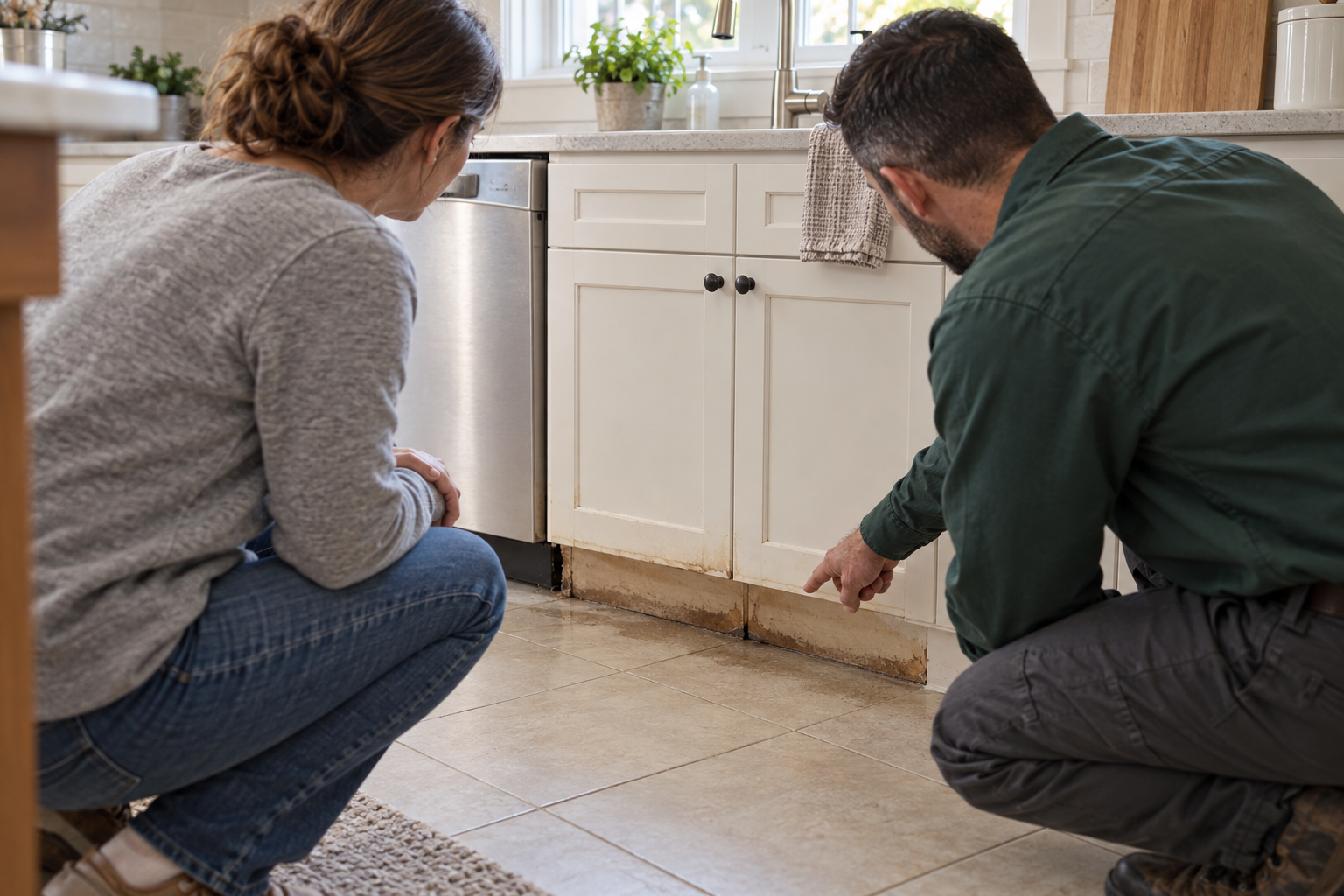
How a Water Damage Insurance Claim Works in Lewisville
What a policy usually covers, and how to run the claim
Free, no-obligation estimates. We answer the phone or call back the same working day.
The short answer
What Homeowners Insurance Covers for Water Damage
A sudden loss such as a burst pipe or an appliance failure is usually covered, while water that seeps in slowly and floodwater from outside often are not.
Usually covered
Water that came from inside the house, with damage you could see the day it happened.
Often not covered
Slow seepage that built up over time, and floodwater that came in from outside.
How the water got in is what the coverage turns on, and the call is your insurer's. Your insurer decides what is covered, what your deductible is and whether the claim is approved, so read your own policy before you assume either way. What you can do from the first day is make sure the loss is on record before anything is moved.
Where policies differ
Floodwater, sewer backups and slow leaks
These are the losses a standard homeowners policy treats differently from a burst pipe, and the ones people are most often surprised by when they file.
How each of them is usually handled is compared below.
-
Flood Damage and Separate Flood Policies
Home insurance often excludes floodwater unless you carry a separate flood policy. FloodSmart: The National Flood Insurance Program explains that flood insurance is its own policy, bought apart from your homeowners coverage.
- Water that came in from outside
- Often excluded from home insurance
- Covered under a separate flood policy
-
Sewer Backup Coverage Riders
Sewage backup coverage is included in some policies and needs a separate rider in others. A sewer backup is "Category 3" water, grossly contaminated, so it is removed and disinfected rather than dried in place.
- Included in some policies
- A separate rider in others
- Removed and disinfected, not dried
-
Slow seepage
Water that seeps in slowly over weeks or months is treated differently from a sudden burst, and it is often not covered. Whether yours is comes down to your policy and to how your insurer reads the loss.
- Built up over time, not sudden
- Often left out of coverage
- Your insurer makes the call
From the leak to the payout
How a Water Damage Claim Works
You report the loss within your policy's time limit, the insurer reviews it, and the insurer decides coverage, the deductible and approval.
The steps of a claim are listed below in order.
- Report the lossCall your insurer and report it. Every policy sets a time limit for filing a claim, so report it early rather than waiting to see how bad it gets.
- Stop further damageShut off the water and get the standing water out. The longer water sits, the higher the risk of mold, bacteria and costly repairs.
- Document the damagePhotos, moisture readings and a written scope record the damage and the work, room by room, from the first day.
- Adjuster reviewThe adjuster looks over the loss and that record, along with the estimate written up for the work.
- Approval and paymentThe insurer decides what is covered, applies your deductible and approves the claim.
Not sure which step you are on? Call and tell us what happened.
For the adjuster
Photos, Moisture Readings and the Xactimate Estimate
You should keep labeled before, during and after photos, moisture readings and a written scope, because adjusters review them alongside an "Xactimate estimate".
What the adjuster will want to see is listed below.
- Before, during and after photos. Good crews photograph every stage for the adjuster and label the photos by room, so each shot shows where it was taken and what changed.
- Moisture readings. Readings show where the water spread and when the materials reached dry, which no photo can. The trade calls the first set "moisture mapping".
- A written scope. The scope names the rooms, what comes out, the drying that goes in and what gets put back, so the work can be checked against it.
- An Xactimate estimate. Xactimate is the industry-standard estimating platform used to document a loss for the insurer, the estimate format adjusters recognize.
Your own photos come first
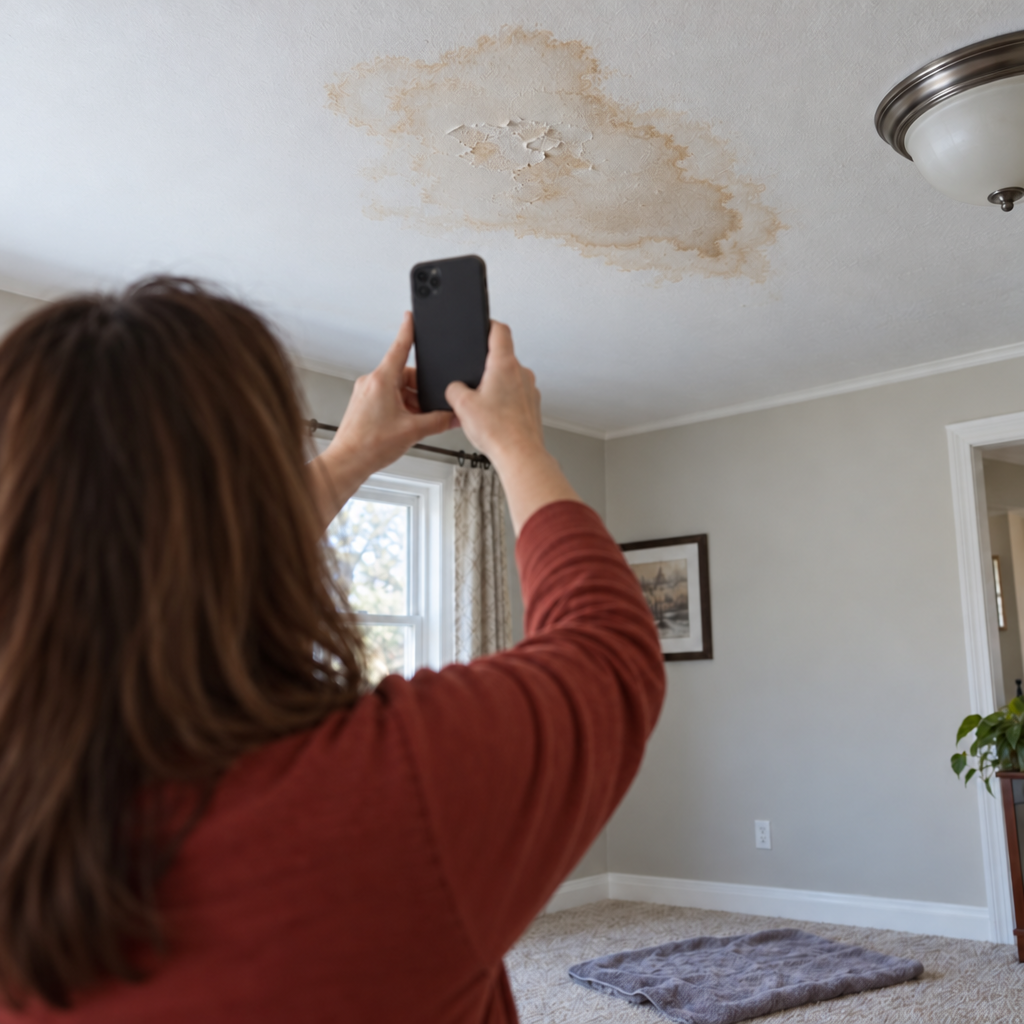
Before anything is moved or thrown out, take these on your phone.
- A wide shot of every wet room
- Close-ups of the water line on walls and cabinets
- The source, if you can see it
- Wet furniture and belongings where they sit
Then call us. We answer the phone or call back the same working day.
Your house, your call
Choosing Your Own Restoration Company
Your insurer is free to suggest a vendor, but you choose who works on your home.
A suggestion is not a requirement. Pick the crew you trust with the house, and if that is us, this is what you can hold us to.
Free, no-obligation estimates.
We look at the loss and tell you what it needs before you commit to anything.
The whole job quoted before we start.
Extraction, drying and repairs are quoted up front, with no surprise charges after.
Answered the same working day.
We answer the phone or call back the same working day, Monday to Saturday.
We show up when we say we will.
You get a time, and that is when we pull up. When the work is done, we clean up.
One more question
Starting Water Extraction Before the Adjuster Arrives
You do not have to wait: getting the water out before the adjuster arrives can limit further damage, as long as the damage is documented first.
Photograph every wet room and the source, then stop the water and start the extraction. The longer water sits, the higher the risk of mold, bacteria and costly repairs, and the record you made first still shows the adjuster what the loss looked like.
Water in the house right now?
Call for a free estimate
Tell us what got wet and how it happened. We will tell you on the phone what it likely needs, then come out, look and put the whole job in writing before any work starts.
(972) 433-0242Monday to Saturday. Calls outside those hours go to voicemail and we return them the next working morning.
We quote the whole job before we start, with no surprise charges after.