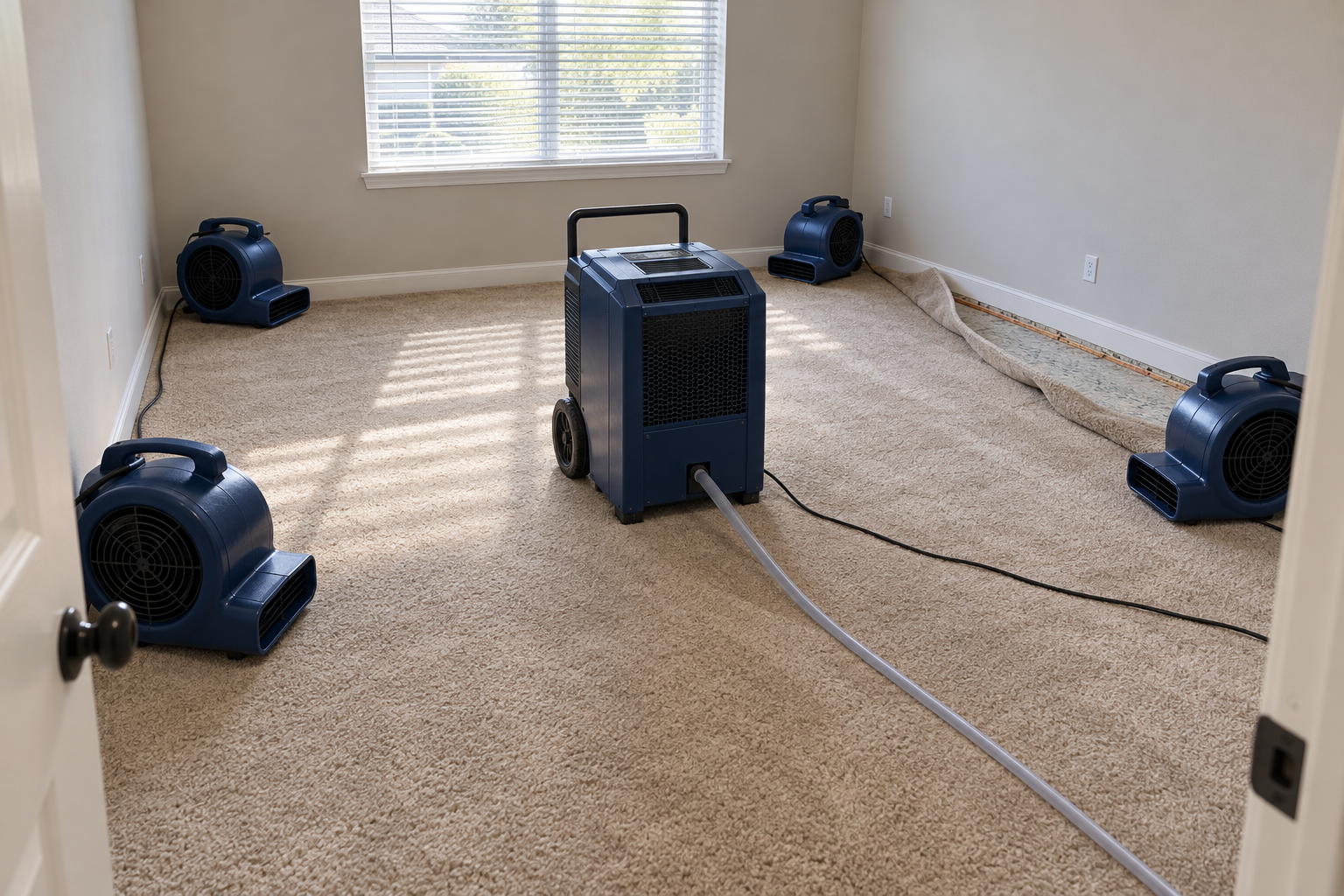
air movers and dehumidifier drying a water damaged room

How Long Water Damage Takes to Dry in Lewisville

Most houses dry in three to five days. The meters say when.

Free, no-obligation estimates. We answer the phone or call back the same working day.

Structural drying, most houses

Three to five days

Counted from the day the standing water is out.

The short answer

Typical Structural Drying Time

Structural drying usually takes three to five days once the standing water is out, and it runs longer when the water reached hardwood, plaster or a concrete slab.

The trade calls this stage "structural drying": drying the building itself with air movers and dehumidifiers after the water has been extracted. Dense materials hold water deep and give it up slowly, so a slab under the carpet or a hardwood floor sets the pace for the whole house.

These materials stretch the drying time:

  • Hardwood floors
  • Plaster walls
  • A concrete slab

Why no two houses dry alike

What Sets How Long Drying Takes

Drying time depends on how much water soaked in, what it soaked, what kind of water it was and how fast extraction started.

  • How much soaked in

    A damp patch of carpet and a wall that has been "wicking" water up from the floor are different jobs. The more the materials took up, the more there is to pull back out.

    FasterWater on the surface of hard floors

    SlowerWater wicked up the drywall and into the pad

  • What it soaked

    Carpet and drywall give water up readily under the right equipment. Hardwood, plaster and a concrete slab hold it deep, and they set the pace for the whole job.

    FasterCarpet, drywall and tile

    SlowerHardwood, plaster or a slab

  • What kind of water

    Clean supply-line water can be dried in place. "Gray water" and "Category 3" sewage add cleaning and disinfection, and the porous materials they touched come out, which changes the timeline.

    FasterA clean supply-line leak

    SlowerWasher water or a sewer backup

  • How fast extraction started

    Skipping extraction and leaning on fans adds days to drying and raises the risk of mold. Every gallon pulled out early is water the dehumidifiers never have to.

    FasterWater extracted the day it happens

    SlowerFans alone, with the water left in

What runs in the house

Air Movers, Dehumidifiers and Moisture Meters

Air movers push air across the wet surfaces, low-grain refrigerant dehumidifiers pull the moisture out of the air, and thermal cameras and moisture meters find what is still wet.

It is louder than you expect and it runs day and night. The sound is the drying working, and the equipment stays until the numbers say it can go.

The drying equipment is listed below with what each does.

  • Air movers"Air movers", the fans you hear running, push large volumes of air across wet carpet, floors and walls to speed evaporation.
  • LGR dehumidifiers"LGR dehumidifiers", low-grain refrigerant units, pull moisture out of the air and dry it further than a standard dehumidifier, protecting the structure and holding off mold.
  • Thermal imagingInfrared cameras, FLIR among them, are used to spot likely patterns of hidden moisture behind walls and along floors.
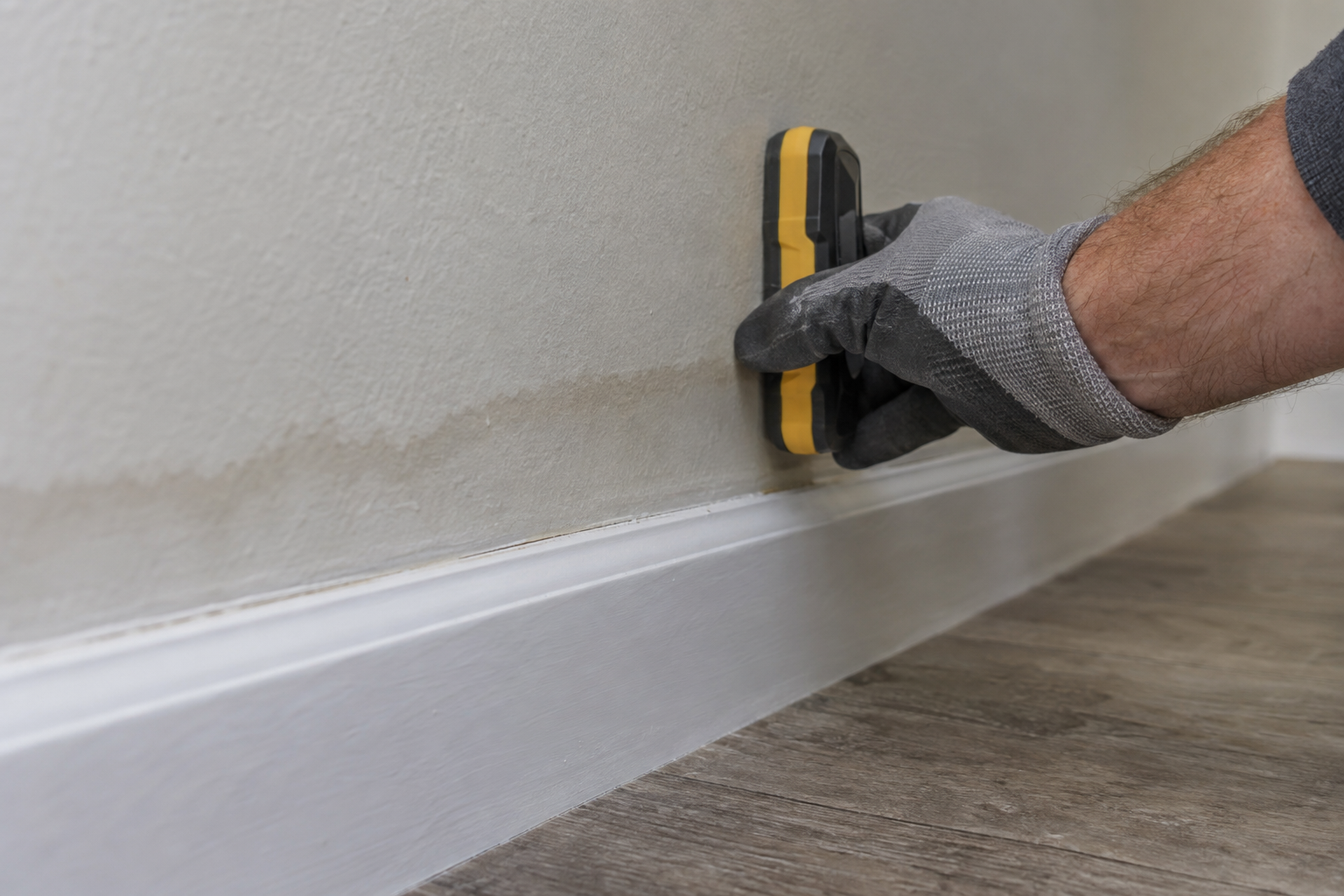
  • Moisture metersPin and pinless meters, such as SurveyMaster models, measure the moisture in the material itself and confirm what the camera suggested.
  • Floor drying systemsSpecialized floor drying systems, such as hardwood mat systems, pull moisture out from beneath the flooring instead of only across its surface.
  • Remote monitoringRemote monitoring sensors let a crew track moisture levels between visits without being on site.

Readings, not the calendar

Moisture Readings That Confirm the Job Is Dry

Drying ends when the logged daily readings reach a target number, not on a calendar date.

After extraction, the dehumidifiers and air movers are set and the first moisture readings become the baseline. The equipment then runs until the framing, floors and walls read dry, with checks every day, and it stays in place until the meters read at target rather than for a fixed stretch of time.

The target is what the trade calls "equilibrium moisture content (EMC)", the level a material settles to in normal conditions, which is what dry means for your house. The job is complete only when readings verify that the materials have reached it, the drying practice set out in the IICRC standard.

Moisture meter held flat against a painted drywall wall just above a white baseboard

Ask to see the readings on these days:

  1. The first dayThe baseline: where the water went and how wet each material is.
  2. Every day betweenThe checks, logged as the numbers come down.
  3. The last dayEvery reading at target before the equipment leaves.

The other clock

Mold Growth After 24 to 48 Hours

Mold can start growing within 24 to 48 hours after water gets in, which is why the drying has to start fast, not only finish right.

The U.S. EPA names quick drying of wet building materials and furnishings as the main way to keep mold out of a home. Water hidden in a wall cavity, under the pad or in the subfloor keeps working after the surface looks dry.

Call for a Free Estimate

We answer the phone or call back the same working day, Monday to Saturday.

Hidden moisture left behind causes this damage:

  • Mold

    Growing out of sight behind drywall and under flooring.

  • Rot

    In the wood framing, subfloor and trim that stayed wet.

  • Structural decay

    The slow weakening of materials that never fully dried.

A straight answer

When Mold Testing Makes Sense

Usually not when the damage is already in plain sight: mold testing adds little when wet or stained drywall is visible, because that material has to come out anyway.

Testing earns its cost when the question is one nobody can see the answer to. Then it is often done by an independent industrial hygienist, who writes the protocol the remediator follows, so the person testing is not the person doing the cleanup.

Whoever you call, a good crew states up front how it will check for mold and what happens if it finds some. Ask that on the first call and expect a plain answer.

The verdict

Usually not

Most of the time the money goes further on drying than on a test.

Skip itMaterial already slated for removal.

Ask about itMoisture hidden behind a finished wall or under the floor.

Before the floors go back

Saving materials and what comes next

Drywall, Carpet and Pad After Water Damage

Drywall that soaked through or sat wet more than a day usually comes out, while carpet is often dried and kept after a clean-water loss and the pad under it almost never is.

Whether a material can be saved depends on how long it was wet, the category of the water and the type of item. Where the wall comes out, the trade's "flood cut" removes the lower section of drywall above the water line so the cavity behind it can dry.

Water Damage Repairs After Drying

Repairs start once the drying is done, and the drying and the rebuild often run on different timelines.

Drying is the emergency stage, the trade's "water mitigation"; reconstruction is a separate stage with its own schedule, from new drywall and paint to flooring. Nothing should be closed up over a wall that has not read dry.

Water still in the house?

Call for a free estimate

Tell us what got wet, what it is sitting on and when it started. We will tell you on the phone what the drying is likely to involve, then come out and look.

(972) 433-0242

Monday to Saturday. Calls outside those hours go to voicemail and we return them the next working morning.

We quote the whole job before we start, with no surprise charges after, and we clean up when the work is done.

Call (972) 433-0242