What the Three Water Damage Categories Mean in Lewisville
Clean, gray or black: the kind of water decides the cleanup
Tell us where the water came from and what it touched, and we will tell you on the phone what kind of water you are dealing with.
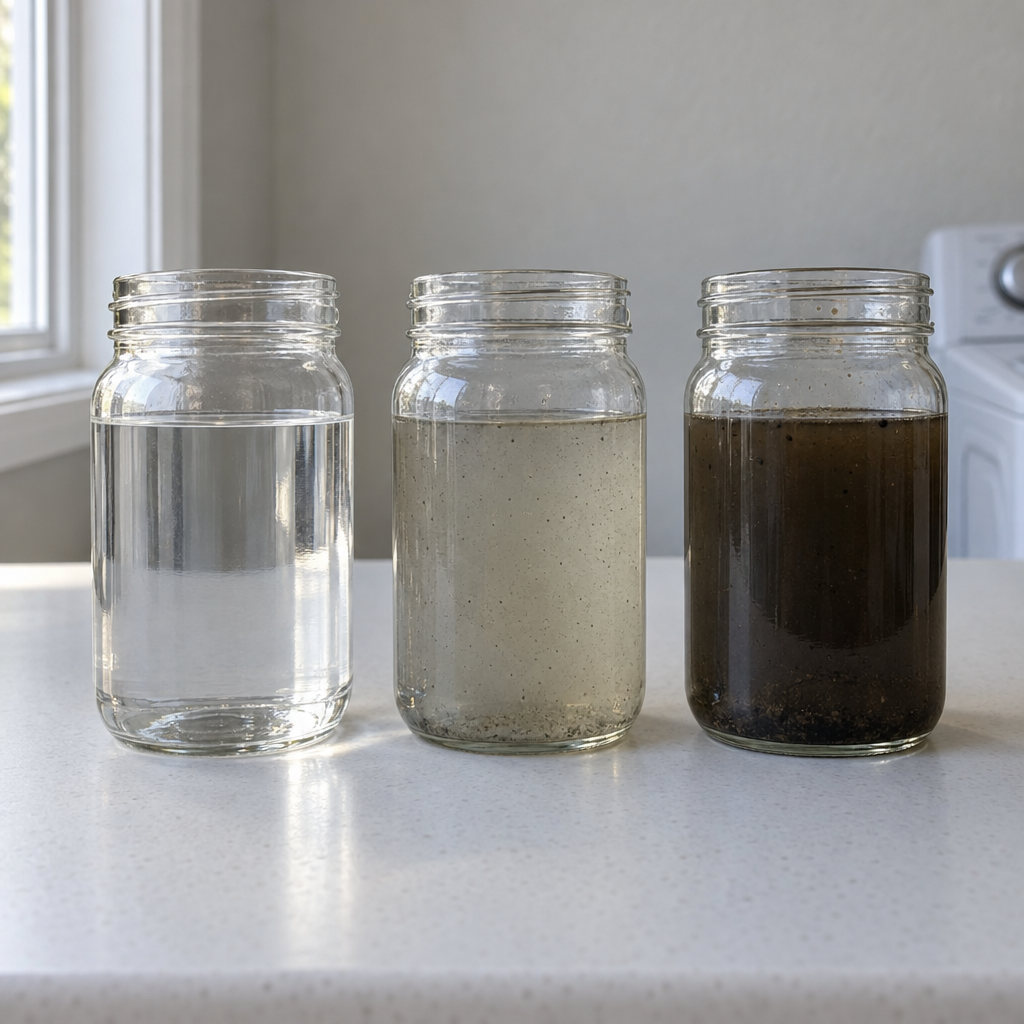
Clean, gray and black
The Three Water Damage Categories
The IICRC S500 standard sorts water damage into three categories by how contaminated the water is: clean water, gray water and black water.
The trade calls this "water classification", and it is the first call made on any job, before a single hose goes in. The water is categorized by its contamination level so the extraction method matches what is in it. Restoration work is done to the ANSI/IICRC S500 water standard, and the S520 mold standard where mold has started.
For you, the category answers the questions that matter most: what gets dried, what gets thrown out, and how long the house is torn up.
From cleanest to dirtiest
Where the water came from
Each category starts at a different source, and each one changes what we can save.
-
Category 1: Clean Water
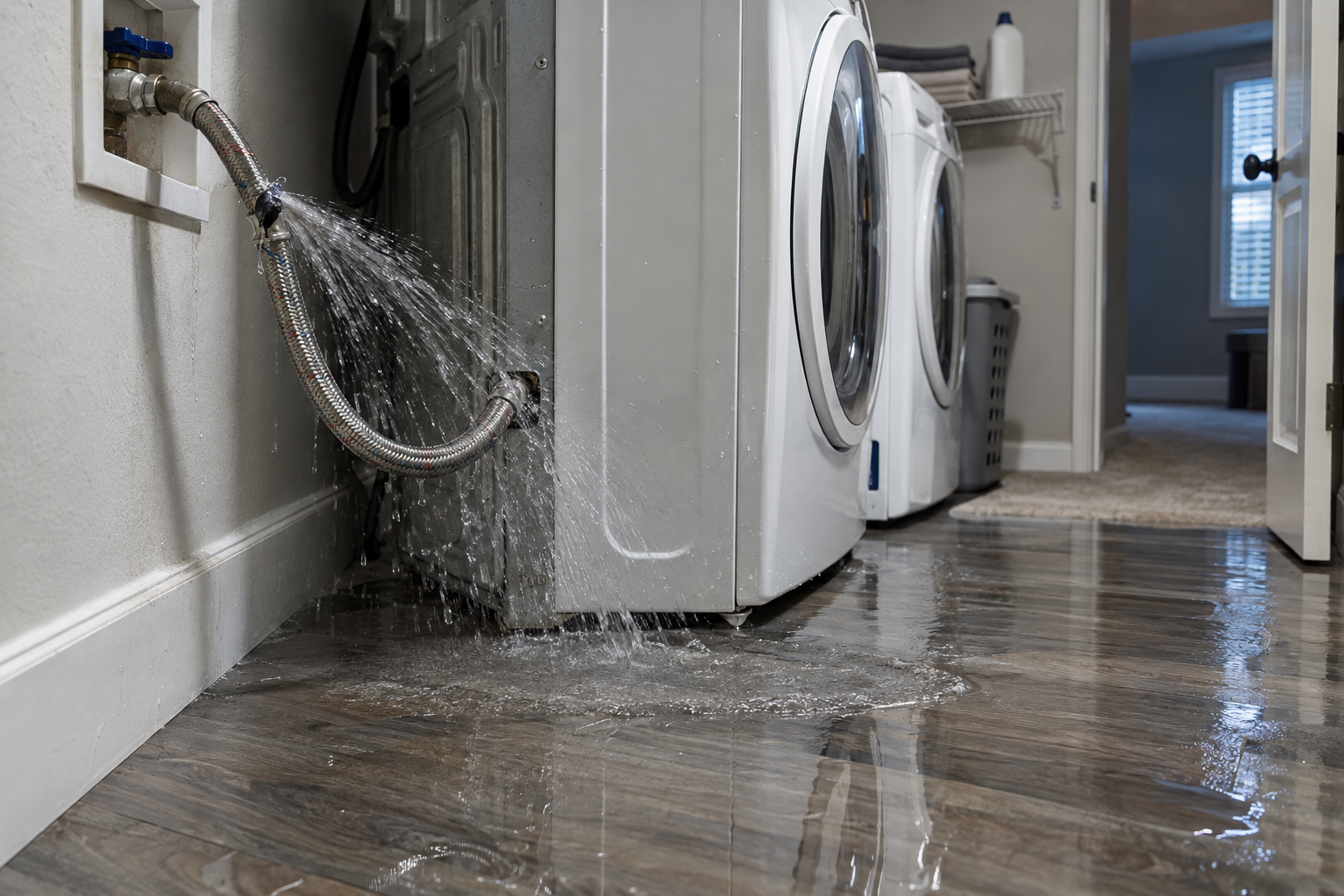
The first category is clean water from a sanitary source, such as a broken supply line, a faucet left running or a split washer supply hose. It is the easiest water to deal with, as long as it is caught before it sits.
- Supply lines and faucets
- Carpet can usually be saved
- The pad under it almost never can
-
Category 2: Gray Water
Category 2 is "gray water", water that carries some contamination, such as the discharge from a washing machine or a dishwasher. It is a step above clean supply-line water, so what it touched gets cleaned and treated, not just dried.
- Washer and dishwasher discharge
- Wet surfaces cleaned and treated
- Gets worse the longer it sits
-
Category 3: Black Water and Sewage
Category 3 is "black water", grossly contaminated water such as sewage or floodwater from outside, and it carries bacteria and viruses that spread quickly. The U.S. EPA advises that damage from sewage or other contaminated water calls for a professional experienced in that kind of cleanup.
- Sewer backups and outside floodwater
- Contained, removed and disinfected
- Never just dried in place
How wet, not how dirty
The Four Classes of Water Damage
The four classes describe how deeply the water has soaked into the house, from a small area of hard, low-porosity surfaces up to saturated hardwood, plaster or concrete.
The category says how dirty the water is; the class says how much of it the materials took up, from minor dampness to deep saturation. The class is what sets how much drying equipment goes into the house and how hard the "structural drying" has to work.
The four classes are listed below from least to most saturated.
- Class OneOnly part of a room got wet, mostly hard surfaces like tile, vinyl plank or sealed concrete, with little carpet or pad involved. The least water and the quickest to dry.
- Class TwoA whole room or more is wet, carpet and pad are soaked, and the water has started "wicking" up the drywall. Drying has to reach the walls as well as the floor.
- Class ThreeThe most water: walls, insulation, carpet and subfloor are saturated, often because the water came down from above through a ceiling.
- Class FourWater has soaked into dense materials such as hardwood, plaster or concrete, which hold it deep and give it up slowly. These are the specialty drying jobs and they take the longest.
What it means for your house
How the Category Changes Cleanup and Cost
The category changes the cleaning method, what gets salvaged, the cost and the timeline, which is why it is settled before any work starts.
The cleaning method.
Clean water is extracted and dried in place. Gray and black water add cleaning and an "antimicrobial" treatment on every surface the water touched, and black water adds containment around the work area.
What can be saved.
That depends on how long a material was wet, the category and the type of item. Carpet can usually be saved after a clean-water leak; after sewage, carpet, pad, drywall and insulation are removed rather than dried.
The cost.
Sewage cleanup costs more than a clean-water loss, because Category 3 water needs containment, removal and disposal of the porous materials, disinfection and drying. We quote the whole job before we start, with no surprise charges after.
The timeline.
Drying a clean-water room in place is the short road. Cutting out, disposing of and replacing contaminated materials adds days, so a black-water job runs longer than a clean-water job of the same size.
Free, no-obligation estimates, and the category settled before we quote.
Why the clock matters
When Clean Water Turns Gray or Black
Yes, clean water can degrade to a worse category as it sits, picking up contaminants from the carpet, pad, drywall and whatever else it soaks into.
The longer water sits, the higher the risk of mold, bacteria and costly repairs. A supply-line leak caught the same day is a clean-water job; the same leak left in the carpet and pad for days is not the water it started as, and it gets handled as the category it has become. That is why we answer the phone or call back the same working day.
What standing water can become
- CleanStraight from the supply line, the day it happens.
- GrayAfter it sits in carpet, pad and drywall and picks up what is in them.
- BlackLeft long enough, it can be treated as grossly contaminated.
Not sure what kind of water it is?
Call for a free estimate
Tell us where the water came from, what it soaked and how long it has been there. We will tell you on the phone which category it sounds like and what that means, then come out and look.
(972) 433-0242Monday to Saturday. Calls outside those hours go to voicemail and we return them the next working morning.
We answer the phone or call back the same working day, and we show up when we say we will.