
Flood Restoration and Cleanup for Lewisville Homes
Mud out, walls opened, dried and rebuilt
Free, no-obligation estimates. We answer the phone or call back the same working day, Monday to Saturday.
What the job covers
Flood Restoration in Lewisville
Flood restoration in Lewisville takes a flooded house from mud on the floor back to finished rooms: the floodwater and debris come out, the ruined materials are cut away, the structure is sanitized and dried, and then it is rebuilt to its "pre-loss condition", the trade's term for the way it was before.
It is one job run in a fixed order. Nothing gets dried while it is still dirty, and nothing gets rebuilt over a wall that is still wet.
What a flood restoration job covers is listed below, in the order the work happens.
-
Water and mud out
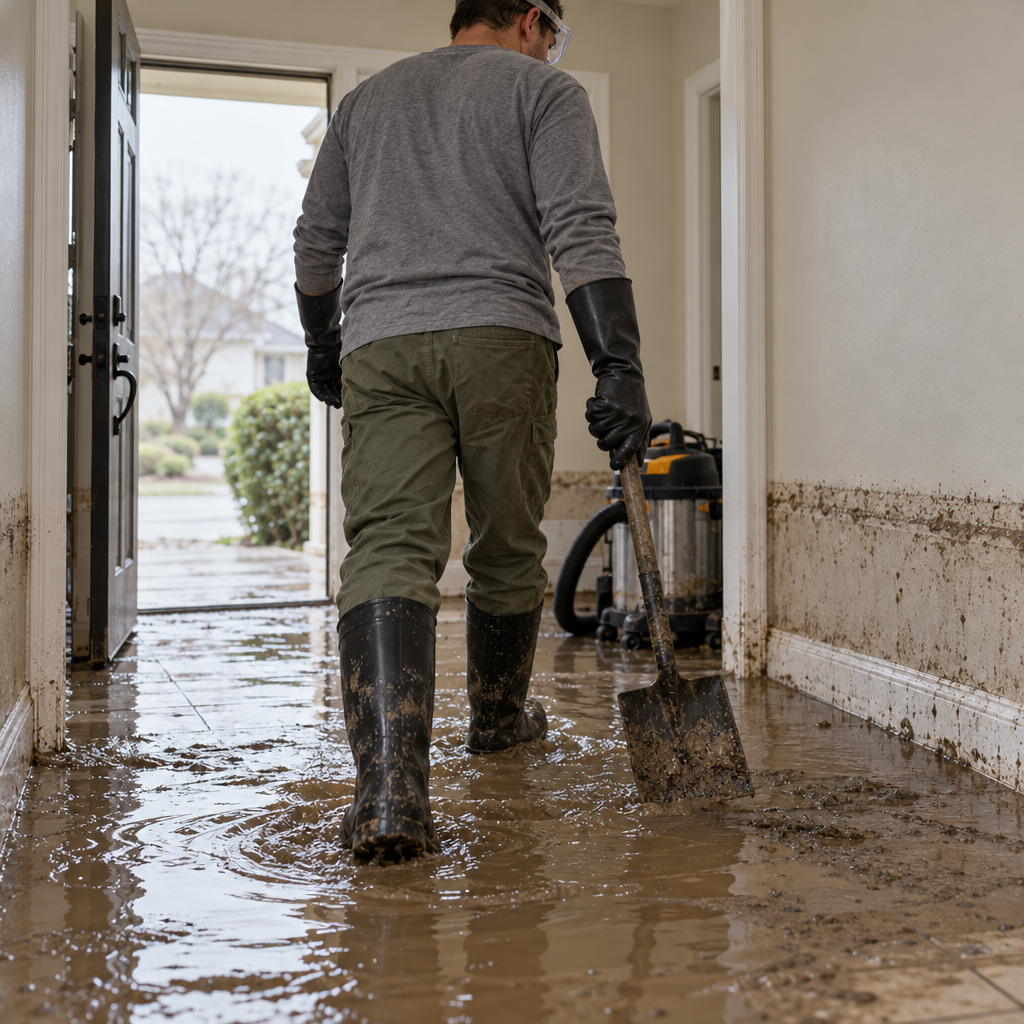
Standing water is extracted first to limit further damage, then the mud, silt and debris the flood carried in are shoveled out and hauled away.
- Water removal
- Debris removal
- Mud and silt shoveled out
-
Cut out and sanitized
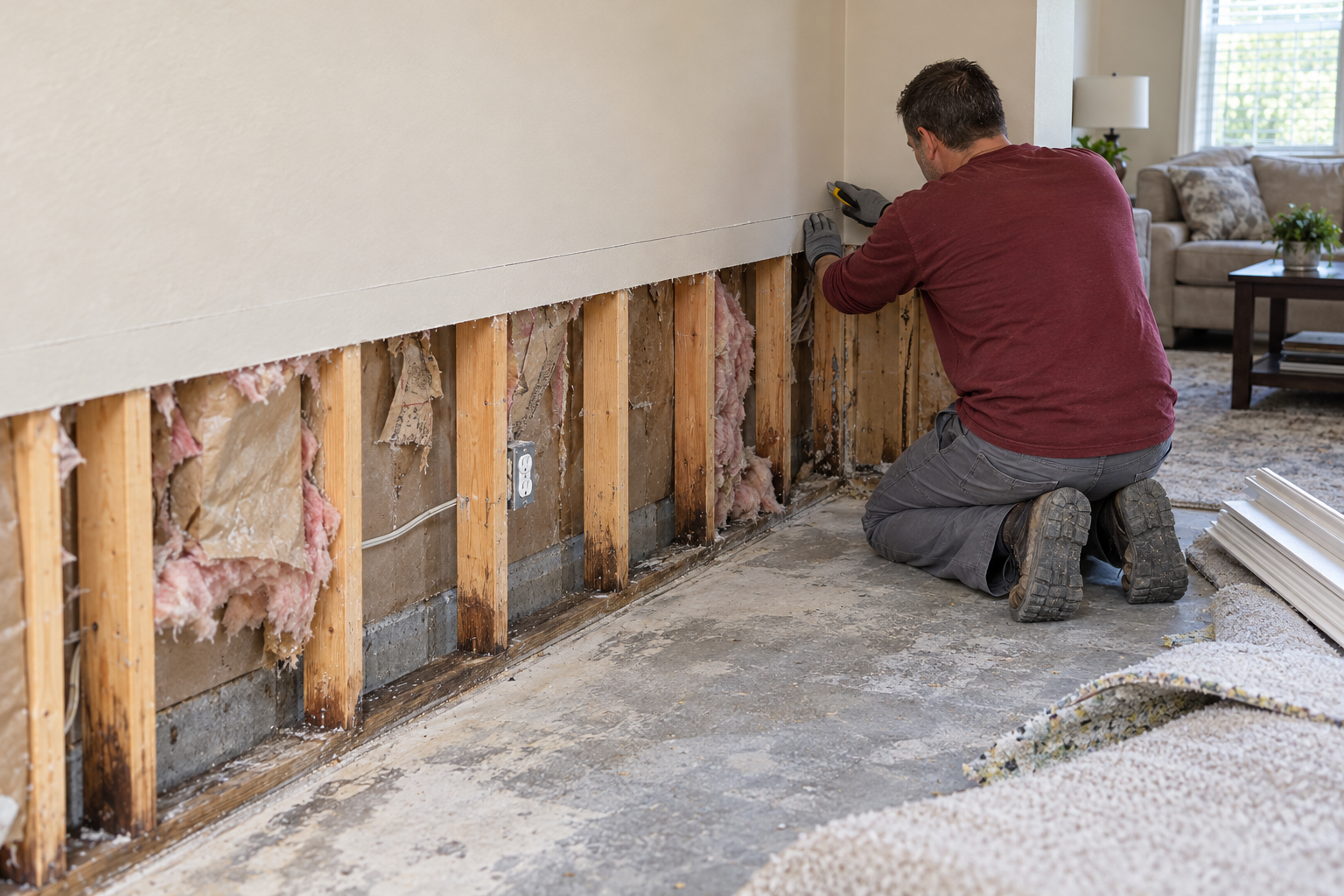
Soaked drywall is cut away above the water line in a straight "flood cut", the wet insulation and pad come out, and every affected surface is cleaned and disinfected against mold, mildew and bacteria.
- Flood cut
- Sanitizing
- Wet insulation and pad removed
-
Dried and rebuilt
Air movers and dehumidifiers run until the framing, floors and walls read dry, then the structural damage is repaired to return the house to its pre-damage condition.
- Structural drying
- Rebuild
- Moisture checks every day
From the call to dry
How Flood Cleanup and Drying Work
The crew extracts the water, mucks out the mud and the soaked materials, cleans and disinfects every surface, then dries the structure until the moisture readings confirm it is dry.
The cleanup runs in this order on a flood job:
- Extract the waterAll standing water is pulled out first, off the floors and the slab, to limit further damage before anything else starts.
- Muck outMud, silt and debris are shoveled out, and the soaked materials that cannot be saved are cut out, bagged and carried to the truck.
- Clean and disinfectEvery affected surface is cleaned and treated with an "antimicrobial" to remove contaminants and keep mold, mildew and bacteria from taking hold.
- Dry until it reads dryAir movers and dehumidifiers run until the framing, floors and walls read dry, with checks every day, and nothing is closed up before they do.
We quote the whole job before we start, with no surprise charges after.
The tear-out
Flood Cuts, Carpet Pad and Insulation
Drywall below the water line, carpet pad and wet insulation usually come out after floodwater, while some carpet and the framing are often cleaned and dried in place.
Whether a material can be saved depends on how long it was wet, what kind of water it was and what the item is. Carpet can usually be saved after a clean-water leak, but the pad under it almost never can, and after sewage every porous material comes out rather than being dried.
Usually comes out. These are torn out and hauled away after floodwater:
- Drywall below the water line
- Carpet pad
- Wet insulation in the wall
- Anything porous that sewage reached
Often cleaned and dried. These can usually stay once they are cleaned:
- Wall framing and studs
- Some carpet, if it was not wet long
- Hard surfaces that can be disinfected
Before anyone wades in
Floodwater Safety and Contamination
Floodwater from outside can carry sewage, chemicals and live electrical current, so the trade treats it as "Category 3" water, the grossly contaminated kind that has to be removed and disinfected rather than simply dried.
A flooded room can hold contaminants or live current, so nobody should walk into the water until the power to that part of the house is off, and anyone who goes in needs rubber boots, rubber gloves and goggles. OSHA's Flood Preparedness and Response guidance lays out the electrical and mold hazards of flood cleanup.
Tell us how high the water got and we will tell you what to stay out of until we arrive.
Our word on a flood job
What you can count on
Free, no-obligation estimates.
We walk the flooded rooms, tell you what has to come out and what the whole job costs, and you decide from there.
Answered the same working day.
We answer the phone or call back the same working day, Monday to Saturday. Calls outside those hours go to voicemail and we return them the next working morning.
Cleanup to rebuild, quoted up front.
The muck-out, the drying and the rebuild are quoted together before we start, with no surprise charges after.
The mess leaves with us.
We show up when we say we will, and we clean up when the work is done: the mud, the torn-out drywall and the equipment go with us.
What it costs
Flood Restoration Pricing
Flood restoration is typically priced by how much of the house got wet, what may have to be torn out, how long the drying runs and how much has to be rebuilt, and a typical Lewisville range for it is published.
The scope, and so the price, is set by the affected area, the materials, the water conditions and the equipment and repairs needed. Floodwater sits at the costly end of water damage because "Category 3" water means containment, removal and disposal of the porous materials, disinfection and drying, while a smaller water damage repair in Lewisville typically runs $2,205 to $2,328.
Your own number comes from the free estimate, and we quote the whole job before we start. Doing the cleanup, the drying and the rebuild in one mobilization also saves setup, disposal and travel costs.
$2,905 to $3,375is the typical range to restore a Lewisville home after a flood. The exact price comes from the estimate.
Living through the repairs
Living at Home During Flood Repairs
Many owners stay in the house while the flood repairs go on, but major or unsafe damage can mean moving out for a while, and the rebuild has to meet building codes.
Which rooms you can still use depends on where the damage is and how much of the house is opened up, and we go through that at the estimate. In a rental, the landlord or property manager is named as the person who gets the updates and approves access, so the work does not stall waiting on an answer.
When the walls go back up, the rebuild is done to the building codes and standards that apply, not just patched closed over the flood cut.
Two more questions
Flood Damage Claims and Insurance
Often not on a standard policy: homeowners insurance often excludes floodwater unless you carry a separate flood policy.
Flood coverage is its own policy, which FloodSmart, the National Flood Insurance Program explains, so check which one you hold before the adjuster visits.
Flood Restoration Around Lewisville
We handle flood cleanup and restoration across Lewisville, TX and the nearby towns listed on our service area page.
That takes in The Colony, Flower Mound and the towns between, and a job just outside that footprint is a question for the call.
Flood restoration questions
What does flood restoration mean?
It means getting a flooded house back to the way it was before. The water and mud come out, the ruined materials are cut away, every affected surface is cleaned and disinfected, the structure is dried, and then the damage is repaired to its pre-damage condition.
What's the difference between remediation and restoration?
Remediation is the cleanup half of the job: removing the water, taking out what is contaminated and drying the structure to stop further damage, the emergency phase the trade calls "water mitigation". Restoration is the repair half that follows once the house reads dry, rebuilding it to its pre-loss condition.
Can I do water restoration myself?
A small clean-water spill on a hard floor, yes, with a wet vacuum and a fan. Floodwater is a different job: it can carry contaminants and live electrical current, anyone going in needs rubber boots, rubber gloves and goggles, and the soaked drywall, pad and insulation have to come out rather than be dried in place.
Floodwater in the house?
Call for a free estimate
Tell us how high the water got, which rooms it reached and how long it has been sitting. We will tell you on the phone what comes next, then come out, look and quote the whole job.
(972) 433-0242Monday to Saturday. Calls outside those hours go to voicemail and we return them the next working morning.
We show up when we say we will, and we clean up when the work is done.