Sewage Cleanup and Disinfection for Lewisville Homes
Contained, removed, disinfected and dried
Keep everyone out of the room until it is contained. We answer the phone or call back the same working day, Monday to Saturday.
After a sewer backup
Sewage Cleanup in Lewisville
Sewage cleanup in Lewisville contains the area, removes the sewage and everything it soaked, disinfects every surface and dries what remains.
It is not the same job as drying out a clean leak. Sewage is "Category 3" water, grossly contaminated, so it has to be removed and disinfected rather than dried in place, and the order of the work is what keeps it from reaching the rest of the house.
What a sewage cleanup covers is listed below.
- Containment of the rooms the water reached
- Sewage removal from floors and fixtures
- Porous material removal, carpet to insulation
- Disinfecting every surface that stays
- Drying the structure that remains
- Odor removal once the source is gone
Black water
Black Water Health Risks
Sewage is "Category 3" black water: it carries bacteria and viruses such as E. coli, Salmonella and hepatitis, and it spreads quickly through whatever it touches.
The CDC publishes guidance on the hazards of floodwater and sewage, and the U.S. EPA: Mold Cleanup in Your Home guide says damage from sewage or other contaminated water calls for a professional experienced in that cleanup. The kind of water decides the whole job.
The three kinds of water a house can take on compare like this.
-
Clean water
Water from a burst pipe or a failed supply line, the least contaminated kind.
- Supply lines and pipes
- Extracted, then dried
- The lowest contamination
-
Gray water
"Gray water" is the dirty water from a washer or another appliance, a step above clean supply-line water.
- Washers and appliances
- Slightly contaminated
- Classified before extraction
-
Removed, not dried
Black water
Sewage and sewer backups, grossly contaminated water that must be removed and disinfected, not just dried in place.
- Sewage and sewer backups
- Bacteria and viruses
- Porous materials come out
From the call to done
Containment, Removal and Disinfection
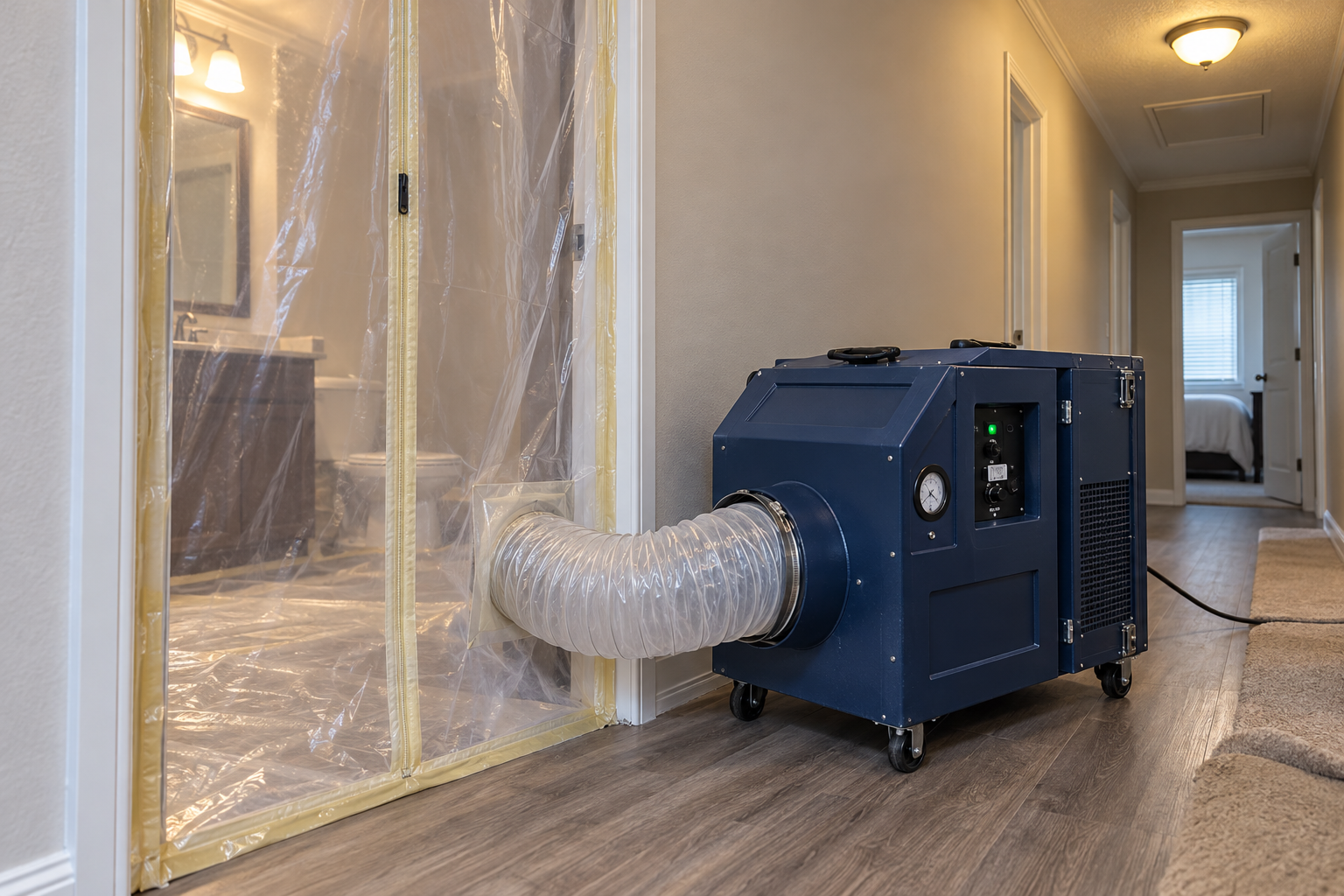
We contain the area with HEPA air scrubbers, remove the waste and the contaminated materials, apply EPA-registered disinfectants by the label and dispose of the waste by regulation.
The steps of a sewage cleanup run in this order.
- You call and we ask about the lineTell us where it backed up and whether the plumbing has been repaired, because a line that is still backing up has to be fixed first or alongside.
- Contain the areaPlastic sheeting closes off the rooms the water reached, and "HEPA air scrubbers" run inside it so the contamination stays put while the work goes on.
- Remove the sewage and what it soakedThe waste comes out first, then the carpet, pad, drywall and insulation it reached are cut out and bagged rather than dried.
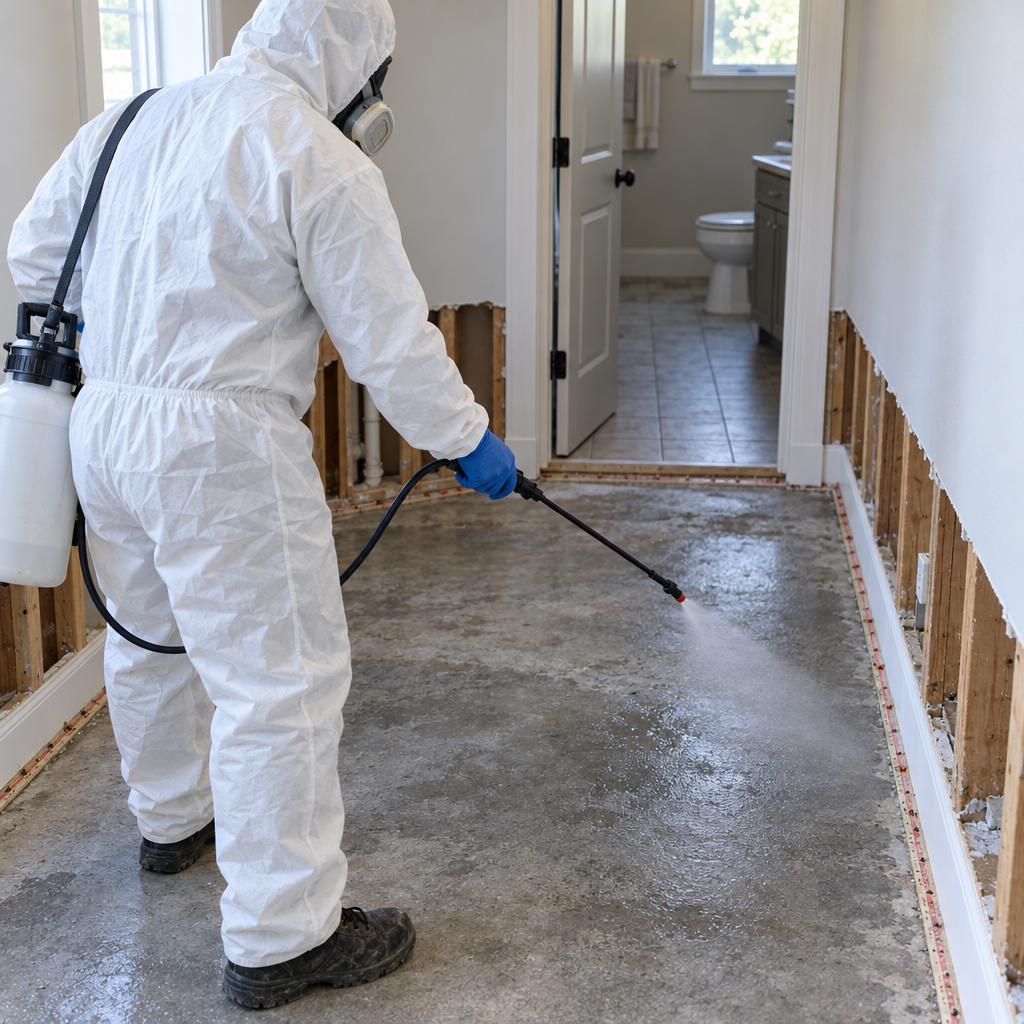
- Disinfect every surfaceDisinfectants are chosen for the situation and applied by the label, and they are products on the U.S. EPA: Selected EPA-Registered Disinfectants list.
- Dispose of it by regulationContaminated waste must be disposed of according to environmental regulations, so it leaves the house bagged and goes where those rules send it.
- Dry and deodorizeWhat remains is dried with air movers and dehumidifiers, and odor removal finishes the job once the source is gone.
What comes out
Carpet, Pad and Drywall After Sewage
After sewage, the porous materials, carpet, pad, drywall and insulation, are removed rather than dried.
They soak the contamination up into their fibers and cores, where no disinfectant reaches. Hard surfaces that stay, such as the slab and tile floors, are cleaned and disinfected instead. On the walls this usually means a "flood cut": the lower section of drywall comes off in a straight line above the water mark.
The materials that come out after sewage are these.
- CarpetIt holds the waste in its fibers and backing.
- Carpet padIt soaks up more than the carpet above it.
- DrywallCut out above the water line with a flood cut.
- InsulationWet insulation behind the cut comes out with it.
Before you let anyone in the door
What you can hold us to
Free, no-obligation estimates.
We look at how far the sewage reached, tell you what has to come out and what it will cost, and you decide from there.
Answered the same working day.
We answer the phone or call back the same working day, Monday to Saturday. Calls outside those hours go to voicemail and we return them the next working morning.
The whole job quoted first.
Containment, removal, disinfection and drying are quoted together before we start, with no surprise charges after.
We clean up when the work is done.
We show up when we say we will, and when the job is finished the bagged materials and the equipment leave with us.
What it costs
Sewage Cleanup Pricing
Sewage cleanup can cost more than a clean-water loss, because "Category 3" water needs containment, removal and disposal of porous materials, disinfection and drying.
A smaller sewage removal and sanitization in Lewisville, TX typically runs $500 to $2,500. Where yours lands comes down to how much of the house the water reached, what it soaked, the access, and the equipment and repairs it takes. We come out, look, and quote the whole job before we start.
The estimate is free and there is no obligation to book.
$1,500 to $5,000is what a sewage backup cleanup typically runs in Lewisville, before anyone has seen yours.
The cause
Sewer Line Repairs Are a Separate Job
Inspecting and repairing the sewer line is a separate job for a plumber, done before or alongside the cleanup.
Fixing the source is never part of the cleanup itself, which is why the first thing we ask on the phone is whether the line has been looked at. Restorers help arrange that plumbing visit, but the inspection and the repair are the plumber's work. Cleaning a room while the line can still back up into it only means doing the cleanup twice.
Sewer Backup Coverage and Water Damage Claims
Sewage backup coverage is included in some policies and needs a separate rider in others, so the wording of your policy decides it.
Sewage Cleanup Around Lewisville
We handle sewage cleanup across Lewisville and the nearby towns on our service area page.
Sewage cleanup questions
How much does it cost to have sewer backup cleanup?
Sewage backup cleanup in Lewisville typically runs $1,500 to $5,000 a cleanup, depending on how far it spread and what it soaked. It costs more than a clean-water loss because the porous materials have to be removed and disposed of and every surface disinfected. Our estimate is free, and our guide to water damage restoration costs in Lewisville covers what sets the price.
What is the best way to clean up sewage?
Contain it, remove it, disinfect, then dry. The area is closed off with HEPA air scrubbers running, the sewage and the porous materials it soaked are removed, and every surface is treated with an EPA-registered disinfectant applied by the label. The contaminated waste is then disposed of according to environmental regulations.
Is it safe to stay in house after sewage backup?
Keep everyone, pets included, out of the affected rooms until they are contained, because sewage carries bacteria and viruses that spread quickly. Whether the rest of the house is fine to stay in depends on how far the water reached, and we tell you what we see when we come out.
Sewage in the house?
Call for a free estimate
Tell us where it backed up, which rooms it reached and whether the line has been fixed. We will tell you on the phone what happens next, then come out and look.
(972) 433-0242Monday to Saturday. Calls outside those hours go to voicemail and we return them the next working morning.
We quote the whole job before we start, with no surprise charges after.