Water Damage Restoration, Extraction and Drying in Lewisville
Extraction, drying and repairs under one recovery plan
Free, no-obligation estimates. We answer the phone or call back the same working day, Monday to Saturday.
What we do
Water Damage Restoration Services in Lewisville
We extract the water, dry the structure and repair what the water ruined, in homes and businesses across Lewisville, under one recovery plan from the first call to the final walk-through.
You deal with one crew and one plan instead of a pump-out company, a drying company and a contractor who have never met. Extraction, structural drying and the restoration repairs are planned together, so nothing gets rebuilt over a wall that is still wet.
The services we handle are listed below, and every one of them starts with a free estimate.
-
Water Extraction
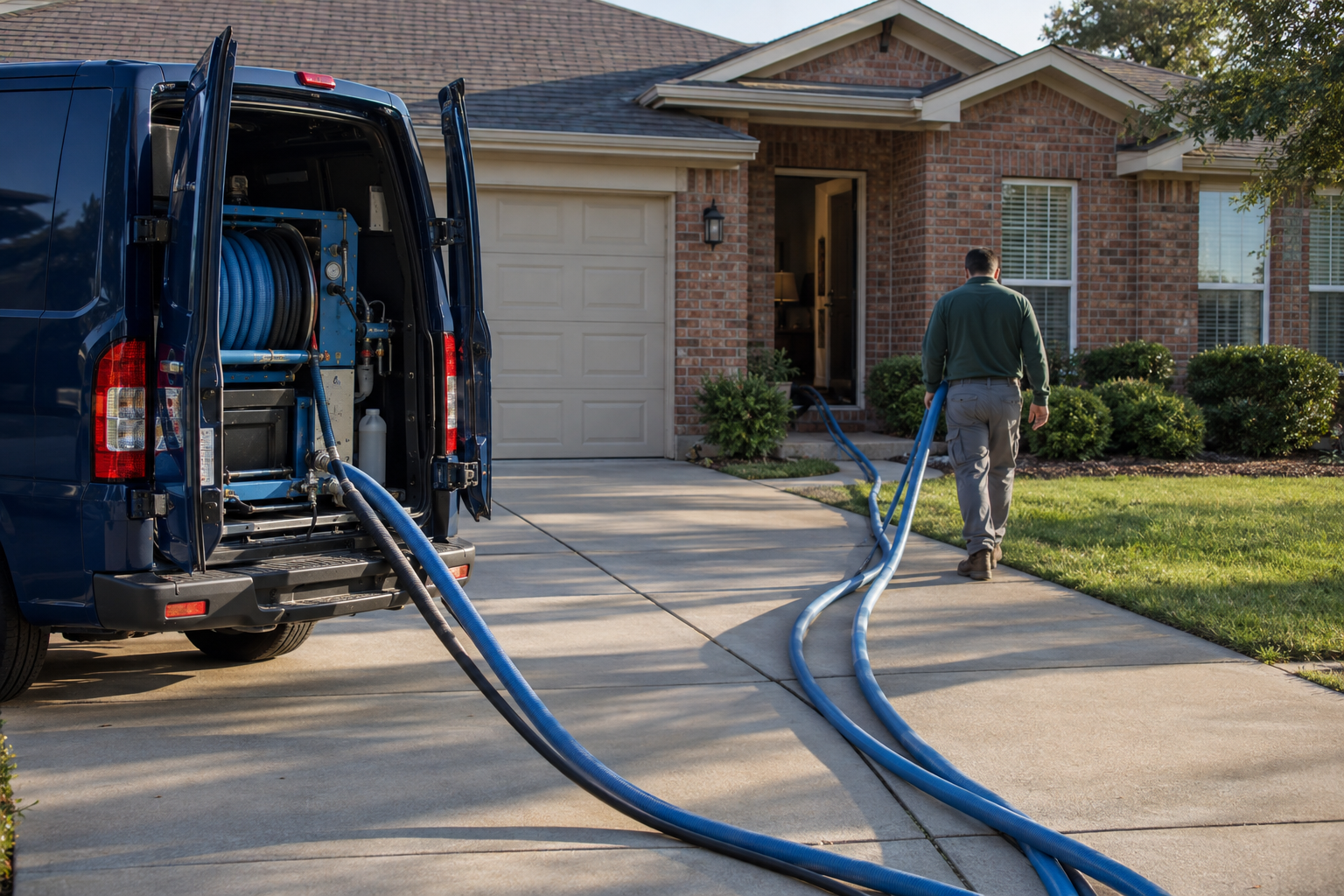
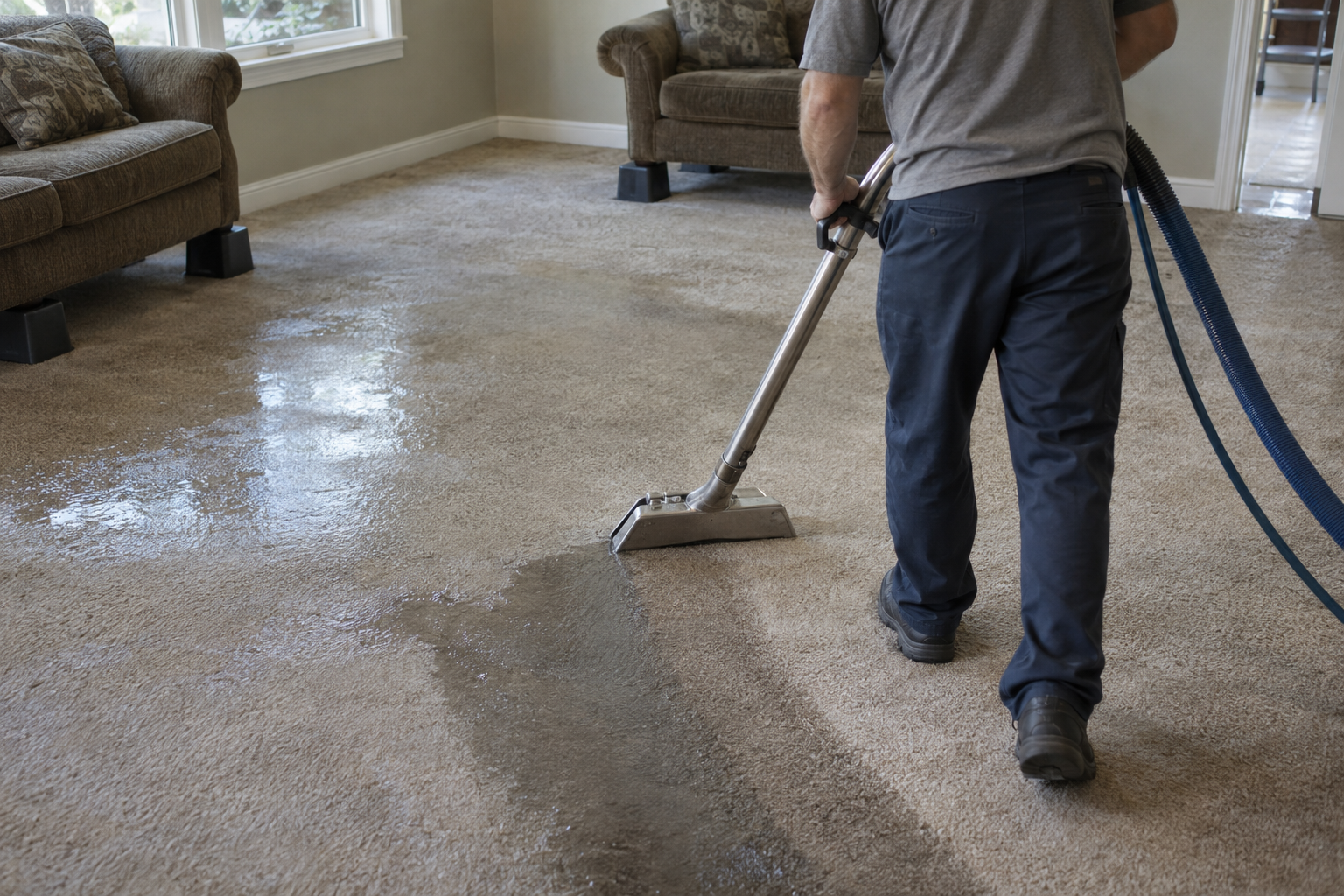
Water extraction pulls the standing water out of carpet, pad and floors with truck-mounted and portable extractors before any drying begins. Carpet gets weighted stand-on tools on a truck-mounted unit, standing water on slab is pumped out with self-priming submersibles, and tile and vinyl plank get squeegee heads.
- Carpet, pad and hard floors
- Truck-mounted and portable extractors
- Standing water pumped off the slab
-
Flood Restoration
Flood restoration removes the floodwater and the mud it carried in, cuts out the soaked materials, then sanitizes and dries the house before any repairs. Every affected surface is cleaned and disinfected to remove contaminants and keep mold, mildew and bacteria from taking hold.
- Floodwater and mud removed
- Soaked materials cut out
- Cleaned and disinfected before repairs
-
Flooded Basement Cleanup
A flooded basement or below-grade room is pumped out, stripped of the soaked materials and dried. Flooded basements can hold contaminants or live electrical current, so making the space safe to enter comes before any pump goes in.
- Pumped out and stripped
- Checked for electrical hazards first
- Dried down to the slab
-
Sewage Cleanup
A sewage backup is "Category 3" water, grossly contaminated, so the area is contained, the contaminated porous materials are removed and every surface is disinfected. After sewage, carpet, pad, drywall and insulation come out rather than being dried in place.
- Area contained before work starts
- Porous materials removed, not dried
- Every surface disinfected
-
Structural drying
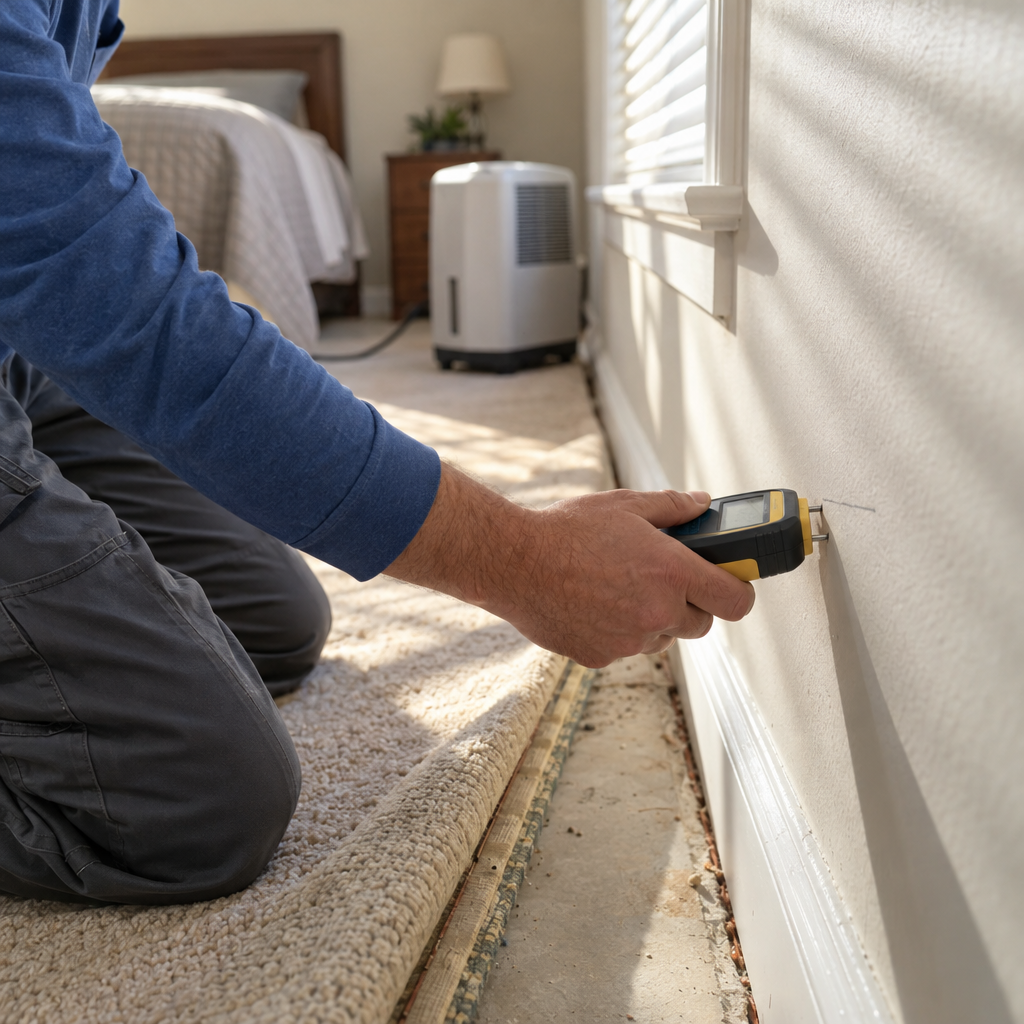
Structural drying is the "drying out" that follows extraction: air movers and dehumidifiers dry the building materials themselves, not just the air. Readings are taken until the framing, drywall and subfloor are back to their normal moisture level, and nothing is closed up before they are.
- Air movers and dehumidifiers placed
- Moisture readings until it reads dry
- A separate stage from the repairs
-
Restoration repairs
Restoration repairs put the house back to its pre-damage condition once the structure reads dry: drywall, trim, flooring and paint. Drying and reconstruction are separate stages with their own timelines, and the job ends with a final walk-through confirming the property is dry and safe.
- Drywall, trim, flooring and paint
- Only after the structure reads dry
- A final walk-through to close the job
How a job runs
How Our Water Damage Restoration Process Works
The job runs in order: inspection, water classification, extraction, structural drying with daily readings, cleaning and disinfection, then repairs and a final walk-through.
The steps of a restoration job are listed below in the order they happen.
- Stop the water and inspectThe first move is shutting off the main supply so the leak stops. Then the inspection measures how far the water has traveled and flags any hazards, the "moisture mapping" that decides the whole scope.
- Classify the waterThe water is sorted as clean, gray or black by how contaminated it is, and that call sets the extraction method and what can be saved.
- ExtractStanding water comes out of carpet, pad, slab and hard floors with truck-mounted and portable extractors, so drying starts from damp rather than wet.
- Dry the structureAir movers and dehumidifiers dry the building materials themselves, with moisture readings taken daily until the structure is back to normal.
- Clean and disinfectEvery affected surface is cleaned and treated to remove contaminants and prevent mold, mildew and bacteria.
- Repair and walk throughDrying and reconstruction are separate stages with their own timelines. Repairs return the property to its pre-damage condition, and the job ends with a final walk-through confirming it is dry and safe.
Why Speed Matters With Water Damage in Lewisville
Mold can start growing within 24 to 48 hours of water getting in, and every hour the water sits it soaks deeper into drywall, subfloor and framing.
The trade calls that upward soak "wicking", and it is why the wet patch you can see is never the whole of it. The longer the water sits, the higher the risk of mold, bacteria and costly repairs, and the U.S. EPA puts the window for drying a wet area before mold takes hold at that same 24 to 48 hours. That is the reason we answer the phone or call back the same working day: the sooner extraction starts, the less there is to cut out later.
24 to 48 hoursis the window to get drying under way, counted from when the water came in, not from when you noticed it.
Where the water comes from
Common Causes of Water Damage in Lewisville Homes
Most water damage starts with a burst pipe, a failed supply line, an appliance leak, a roof leak or storm water, and most of it ran for a while before anyone saw it.
The usual sources of a water loss are listed below.
- Burst pipe. A frozen pipe usually splits downstream of the ice plug, not where it froze, because pressure builds against the closed fixture.
- Supply line. The small lines under sinks and behind toilets fail at the fitting and run until someone notices the floor.
- Washing machine. A burst washing machine supply hose can release 500 to 800 gallons in an hour.
- Water heater. A tank that lets go in a hall closet or garage soaks the rooms around it before the floor shows it.
- Appliance leak. Refrigerator ice maker lines fail at their compression fittings and can leak unseen into the flooring and subfloor for months.
- Roof leak. Storm water comes in at flashing and vents and shows up as a stained ceiling long after it started.
- Slab. A line under the slab leaks upward into the floor, and the first sign is often warm flooring or boards with raised edges, what the trade calls "cupping".
When to Call a Water Damage Restoration Company
You need a professional once water has reached carpet, drywall, cabinetry or insulation, or when no one knows how long it ran.
A small leak caught quickly on tile, with nothing porous wet, needs only a shop vacuum and a fan, not a restoration crew, and we will tell you so on the phone. The trouble starts when the water has soaked into pad, drywall or the base of the cabinets, because a shop vac cannot reach what the materials have already taken up.
Call for a Free EstimateNot sure which one you have? Describe it and we will tell you straight.
What you can hold us to
Why Lewisville calls Pro Restoration
Free, no-obligation estimates.
We look at the loss, tell you what it needs and what it will cost, and you decide from there.
Answered the same working day.
We answer the phone or call back the same working day, because standing water does not wait for a convenient time.
We show up when we say we will.
You get a time, and that is when the van pulls up. If anything changes you hear it from us first.
The whole job quoted before we start.
Extraction, drying and repairs are quoted together up front, with no surprise charges after.
We clean up when the work is done.
Wet materials, debris and equipment leave with us, and the house is left ready to live in.
Monday to Saturday.
Calls outside those hours go to voicemail and we return them the next working morning.
What it costs
Free Estimates and Water Damage Costs
Every job starts with a free estimate, and the price is set by the affected area, the materials, the water category and the drying and repairs needed.
There is no flat rate for a water loss because no loss is the same size as the last. What sets restoration prices, laid out in full on Water Damage Cost, is how much of the house got wet, what it soaked, whether the water was clean, gray or black, and how much equipment and repair work it takes to get the structure dry and put back. A clean supply-line leak caught early on tile is a small job. A sewage backup costs more because Category 3 water needs containment, removal and disposal of the porous materials, disinfection and drying.
We quote the whole job before we start, with no surprise charges after, and handling the extraction, drying and repairs under one plan saves the setup, disposal and travel costs of bringing in separate crews. Call, describe what you see, and we will come out and put a number on it.
Before the Restoration Starts
Most owners ask about insurance, the kind of water involved and whether their town is covered before any work begins, so here are the short answers.
Insurance and Water Damage Claims
Sudden losses such as a burst pipe or an appliance failure are usually covered by homeowners insurance, while floodwater from outside and slow seepage often are not.
Coverage turns on how the water got in, so the inspection notes and photos from the first visit matter to the claim. Adjusters work from an estimate format called an "Xactimate estimate", built alongside the moisture mapping and photos, which is why the record from the first day counts.
Clean, Gray and Black Water
Water damage is sorted into categories by how contaminated the water is, and the category decides how it is cleaned and what gets saved.
Clean supply-line water, "gray water" from an appliance and "black water" from a sewer backup are handled differently under the IICRC S500 standard the trade works to, and the water is categorized before extraction so the method matches the contamination.
Where we work
Towns We Serve Around Lewisville
We work in Lewisville, Texas, and the surrounding towns listed on our service area page, and a job just outside that footprint is a question for the call.
Hebron, Hickory Creek, Highland Village, Lakewood Village, Lake Dallas, Carrollton, Coppell and Hackberry are all inside our regular run, and the town pages below say what we see most often in each.
Water in the house?
Call for a free estimate
Tell us what you see, where it is and how long it has been wet. We will tell you on the phone what it needs and whether it needs us at all, then come out and look.
(972) 433-0242Monday to Saturday. Calls outside those hours go to voicemail and we return them the next working morning.
We quote the whole job before we start, with no surprise charges after.